
With the introduction of the N93, Nokia also introduced a new processor to their lineup. The N93 is currently the only handheld using this processor and it is doing it’s best to take advantage of it. The glorious VGA recording at 30fps is made possible by this new processor. It has also given it a 3D graphics accelerator. One thing that I have no way of testing is WLAN performance. The processor shows that it has support for AES and PKA encryption. See the image below, the encryption section is in the center.
The older 1710 processor does not have this feature. This leaves me to assume that it was handling the encryption via software. If the processor natively supports the encryption method then there may be a considerable speed increase. I STILL don’t have one of the new N or E series phones, so all I have to go by are the remarks of others, and what I have heard is that the WLAN speeds are not as high as they had hoped. Onward to the full specs of this amazing processor.
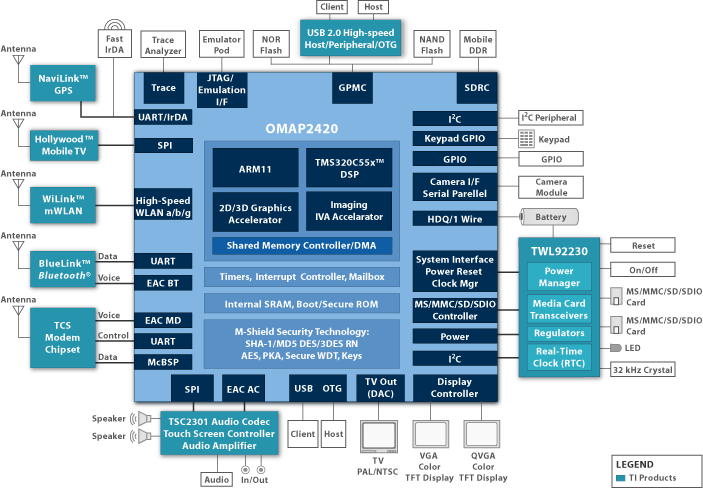
The OMAP2420 processor is a single-chip applications processor that supports all cellular standards, and complements any modem or chipset and any air interface. It is intended for high-volume wireless handset manufacturers and is not available through distributors.
The OMAP2420 includes the benefits of the OMAP 2 architecture’s parallel processing, giving users the ability to instantly run applications and operate multiple functions simultaneously without quality of service compromises. The OMAP2420 includes an integrated ARM1136 processor (330 MHz), a TI TMS320C55x™DSP (220 MHz), 2D/3D graphics accelerator, imaging and video accelerator, high-performance system interconnects and industry-standard peripherals.
Download the following documents for more information:
* OMAP2420 Product Bulletin (TI_omap2420.pdf, 210 KB)
2005 Download
* OMAP2420 Software Development Platform (TI_sdp_omap2420.pdf, 227 KB)
2005 Download
Multimedia enhancements made in the OMAP2420 include an added imaging and video accelerator for higher-resolution still capture applications, multi-megapixel cameras and full-motion video encode and decode with VGA resolution of 30 frames per second. An added TV video output supports connections to television displays for displaying images and video captured from the handset. 5-Mb internal SRAM also boost streaming media performance.
Access to the OMAP Developer Network also provides an extensive range of programs and media components that manufacturers can use for differentiating and delivering products to market fast.
Key Features:
* Dedicated 2D/3D graphics accelerator at 2 million polygons per second
* Added imaging and video accelerator enables high-resolution still image capture, larger screen sizes and higher video frame rates
* Supports high-end features including 4+ megapixel cameras, VGA-quality video, high-end interactive gaming functionality and analog/digital TV video output
* 5-Mb internal SRAM boosts streaming media performance
* Software compatibility with previous OMAPâ„¢ processors
* Parallel processing ensures no interruptions or degradation of service with simultaneously running applications
* Optimized power management companion chip, TWL92230
* 12 mm x 12 mm, 325-ball MicroStar BGAâ„¢, 0.5-mm pitch


